The Virtues of the First 10 Days of Dhul Hijjah and the Day of Arafah: Importance, Rewards, and What to Do


Why These Days Matter

As Muslims prepare for Eid al-Adha, many are unaware that the first 10 days of Dhul Hijjah are among the most beloved days to Allah. These days are more rewarding than even the last 10 nights of Ramadan—except for Laylatul Qadr.
The Prophet Muhammad ﷺ made it clear: no other days offer the same level of reward, forgiveness, and closeness to Allah. This is a divine opportunity that comes only once a year.
What Makes the First 10 Days of Dhul Hijjah So Special?
1. Allah Himself Swears by These Days
“By the dawn. And [by] the ten nights.”
(Surah Al-Fajr 89:1–2)
The Mufassirun (scholars of Tafsir) say these 10 nights refer to the first 10 days of Dhul Hijjah.
2. The Prophet ﷺ Called Them the Best Days
“There are no days on which righteous deeds are more beloved to Allah than these ten days.”
(Sahih Bukhari)
The Sahabah were surprised and asked, “Not even Jihad?”
The Prophet ﷺ said: “Not even Jihad, unless a man goes out for Jihad with his life and wealth and returns with nothing.”
This hadith alone tells us how HUGE these days are!
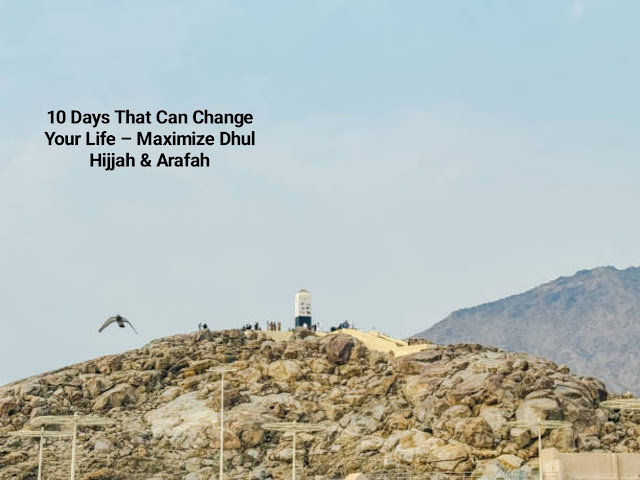
3. The Day of Arafah (9th Dhul Hijjah) – The Peak
This is the most sacred day of the year:
-
The day Allah completed the religion:
“This day I have perfected for you your religion and completed My favor upon you…” (Qur’an 5:3)
-
The Prophet ﷺ said:
“Fasting the Day of Arafah wipes out the sins of the previous year and the coming year.”
(Sahih Muslim) -
It is the day of Hajj climax, when pilgrims stand in Arafat.
4. Hajj Is Performed in These Days
- Hajj is one of the five pillars of Islam.
- Millions gather in Makkah to fulfill the legacy of Prophet Ibrahim عليه السلام.
For those not going to Hajj, these days still offer the reward of sincere devotion, sacrifice, and remembrance.
5. Eid al-Adha and the Udhiyah Sacrifice (10th Dhul Hijjah)
- Eid al-Adha is a major Islamic festival tied to the story of Prophet Ibrahim and his son Isma’eel.
- Sacrificing an animal on Eid is Sunnah Mu’akkadah for those who can afford it.
“It is neither their meat nor their blood that reaches Allah, but it is piety from you that reaches Him.”
(Qur’an 22:37)
Best Actions to Do During the First 10 Days of Dhul Hijjah

1. Fasting
- Try to fast the first 9 days.
- The Day of Arafah (9th) is the most important.
2. Increased Dhikr
-
Say:
SubhanAllah, Alhamdulillah, La ilaha illa Allah, Allahu Akbar
As often as possible. -
Say the Takbeer aloud:
Allahu Akbar, Allahu Akbar, La ilaha illa Allah, Allahu Akbar, Allahu Akbar, wa Lillah il-hamd
-
This can be done after every Salah, especially from Fajr on 9th Dhul Hijjah till Asr on 13th Dhul Hijjah.
3. Qur’an Recitation
- Increase your connection with the Qur’an.
- Aim to complete a portion each day.
4. Charity and Good Deeds
- Give daily sadaqah.
- Support causes—orphans, masjids, Qur’an schools, and the poor.
5. Dua
- Make lots of dua—especially on the Day of Arafah.
- Ask for forgiveness, health, guidance, and Jannah.
6. Repentance (Tawbah)
- These days are a perfect time to turn back to Allah.
- Make sincere tawbah and resolve to change.

Which Is Better: The Days of Dhul Hijjah or the Days of Ramadan?

Many Muslims wonder: Are the first 10 days of Dhul Hijjah better than the days of Ramadan?
The Prophet Muhammad (صلى الله عليه وسلم) said:
"There are no days in which righteous deeds are more beloved to Allah than these ten days."
(Sahih al-Bukhari 969)
This authentic hadith clearly shows that the days of Dhul Hijjah are the most rewarding days in the entire Islamic year—even more virtuous than the days of Ramadan.
So, yes: The days of Dhul Hijjah are better than the days of Ramadan.
Are the Nights of Dhul Hijjah Also Better Than the Nights of Ramadan?
This is a great question!
According to scholars like Ibn Qayyim and others:
- The days of Dhul Hijjah are more virtuous than the days of Ramadan.
- But the last ten nights of Ramadan—especially Laylatul Qadr (The Night of Power)—are better than the nights of Dhul Hijjah.
So, to summarize:
- Best Days: The first 10 days of Dhul Hijjah
- Best Nights: The last 10 nights of Ramadan
This balance highlights the divine wisdom and encourages us to strive for excellence in both sacred seasons.
Bonus: For Sisters on Their Periods
Even if you can’t fast or pray, you can:
- Make dhikr
- Give charity
- Read/listen to Qur’an (with respect)
- Make dua
You still get massive reward!
Conclusion: Don’t Let These Days Pass You By
These first 10 days of Dhul Hijjah are an unmatched chance to stack your scale of good deeds. Whether you’re fasting, praying, giving charity, or even just saying Alhamdulillah—every deed is multiplied.
Start preparing today. Make a list of goals. Wake up early. Seek forgiveness. Reconnect with Allah.
Follow our channel for more inspiring Islamic reminders and guides.
Comments
Post a Comment